
Ankle-Brachial Index

What is the Ankle Brachial Index
The ankle brachial index (ABI) is a non-invasive test that compares blood pressure in the ankle and the arm to assess for peripheral artery disease (PAD), a condition where arteries narrow or become blocked. A lower ankle blood pressure compared to arm blood pressure can indicate PAD. This test helps determine the severity of PAD and can be an indicator of cardiovascular risk.
Why we do this scan
The ABI can be done at rest and after exercise to help diagnose and assess the severity of peripheral artery disease. ABI results can help guide treatment decisions, including lifestyle changes, medication, or procedures to improve blood flow. The ABI is also used to assess the safety of compression therapy for venous conditions, as it helps determine if a patient's arteries can handle the pressure.
Why choose us
An experienced sonographer is preferred for ABI testing because accurate measurement of systolic blood pressure in the limbs is crucial for reliable results, and experience helps in overcoming challenges like patient movement, body habitus variations, and interpreting subtle Doppler signals. Certain conditions, like arterial calcification (common in diabetes and kidney disease), can make arteries less compressible and lead to falsely elevated ABI readings. An experienced sonographer can recognize these factors and interpret the ABI results accordingly.
Preparation for the ultrasound
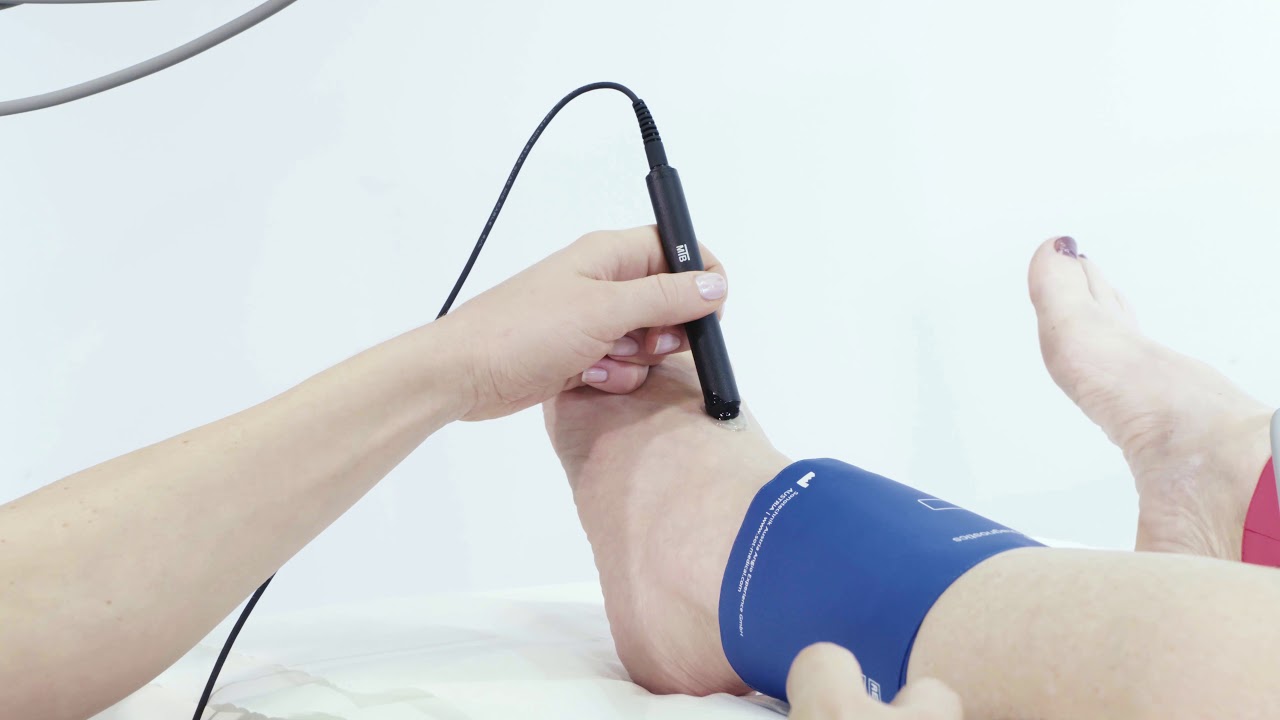
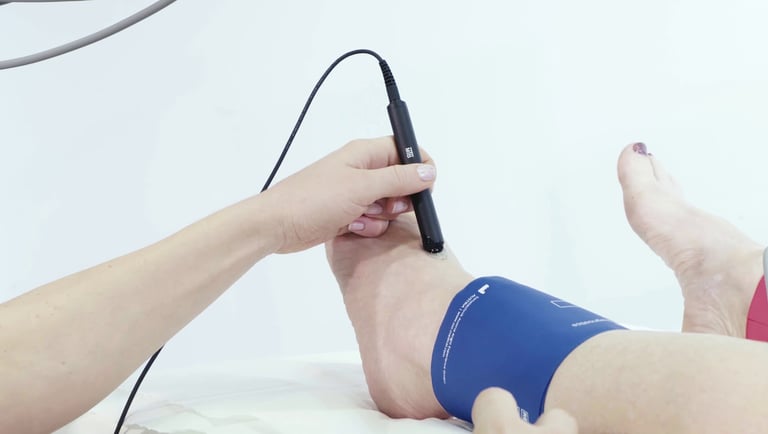
There is no patient preparation needed for this test which will take up to 20 minutes. We will need access from the calf to the foot so you will be required to remove shoes and socks and any large dressings at the feet and ankles. Loose, comfortable clothing is preferred. Dresses and skirts don't need to be removed if they can be lifted out of the way. We will ask for you to lie on your back on the examination bed and apply gel to the ankle, moving a small transducer over the area. Blood pressure cuffs will be placed on the upper arms and ankles and a small Doppler ultrasound device will listen to blood flow in the arteries. The cuffs will be inflated, and the pressure will be slowly released to measure systolic blood pressure. The test is generally painless, though the cuff inflation may feel tight.
CoreWave Vascular Ultrasound
Locations:
Wangara
Suite 3, 46 Buckingham Drive
Wangara, WA 6065
Canning Vale
Queensgate Specialist Centre
Suite 11, 2nd Floor, 2 Queensgate Drive
Canning Vale 6155
Waikiki Specialist Centre
Suite 7, 217 Willmott Drive
Waikiki, WA 616
Duchess Medical Practice
4/69 Duchess Street
Busselton, WA 6280
Contact Information:
Email: office@corewave.com.au
Phone: 0437 507 282
Business hours:
9am - 5pm
Monday to Friday
Saturdays – fortnightly
Fax: (08) 7947 7282