
May Thurner Syndrome


May Thurner Syndrome
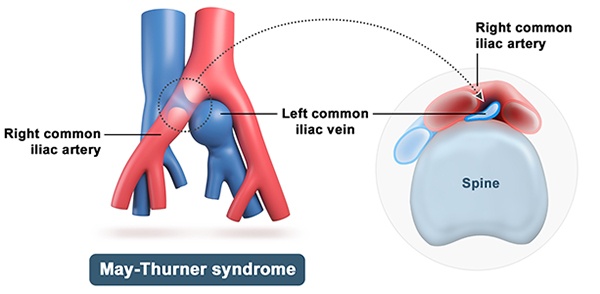
May-Thurner syndrome (MTS), also known as iliac vein compression syndrome or Cockett syndrome, is a condition where the left iliac vein is compressed by the right iliac artery, hindering blood flow back to the heart, leading to narrowing and scarring, pain and swelling, and an increased risk of blood clots in the left leg.
Why choose us
The iliac veins are situated deep within the pelvis, requiring skilled technique and proficiency to visualize them effectively with ultrasound. An experienced sonographer can identify subtle signs of compression, such as changes in vein diameter and blood flow patterns, which might be missed by a less experienced practitioner. We can differentiate MTS from other conditions that may present with similar symptoms, such as DVT and venous insufficiency, using our knowledge of the anatomical characteristics of MTS.
Risk factors
May-Thurner Syndrome risk factors include female sex, pregnancy, multiparity, oral contraceptive use, prolonged inactivity, and conditions like scoliosis or dehydration. It's also more prevalent in younger individuals, particularly women between 20 and 40, and those with a history of deep vein thrombosis (DVT). While not a direct cause, Scoliosis can increase the risk of MTS due to the potential for the spinal curvature to compress the vein against the spine.
Symptoms
May-Thurner syndrome often presents with no symptoms, but when they do occur, they commonly include left leg symptoms:
Leg swelling: Potentially extending to the foot.
Left pain: Aching, cramping, or heaviness, potentially aggravated by standing or sitting.
Varicose veins: In the affected leg.
Skin changes: Discoloration, rashes, or slow-healing ulcers.
Deep vein thrombosis (DVT): Blood clots in the leg veins, which can be a serious complication.
Complications
This compression can lead to venous stasis, reduced blood flow, and the potential development of deep vein thrombosis (DVT) in the left leg. Some females with May-Thurner syndrome may also develop pelvic congestion syndrome.
Preparation for the ultrasound
Fasting (no eating or drinking) is required for 5 hours prior to the ultrasound. Fasting reduces the amount of gas in your abdomen, which provides clearer images of the arteries. All patients should take their usual oral medications with a small amount of water. DO NOT fast if you are a Diabetic. We will ask for you to lie on your back on the examination bed and apply gel to the skin, moving the transducer over the area. The procedure is usually painless and you will hear noises from the ultrasound machine which is the blood flow moving through your veins.
CoreWave Vascular Ultrasound
Locations:
Wangara
Suite 3, 46 Buckingham Drive
Wangara, WA 6065
Canning Vale
Queensgate Specialist Centre
Suite 11, 2nd Floor, 2 Queensgate Drive
Canning Vale 6155
Waikiki Specialist Centre
Suite 7, 217 Willmott Drive
Waikiki, WA 616
Duchess Medical Practice
4/69 Duchess Street
Busselton, WA 6280
Contact Information:
Email: office@corewave.com.au
Phone: 0437 507 282
Business hours:
9am - 5pm
Monday to Friday
Saturdays – fortnightly
Fax: (08) 7947 7282