
Ovarian Veins


Ovarian veins
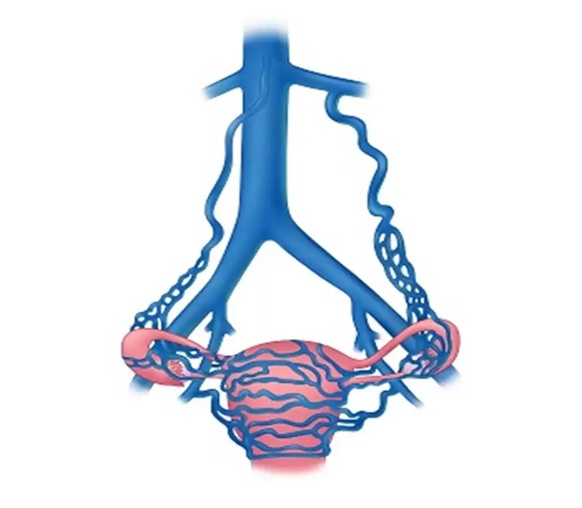
The ovarian veins are paired blood vessels that drain deoxygenated blood from the ovaries back to the heart for reoxygenation. Pelvic Congestion Syndrome is a chronic pain syndrome in women caused by the backflow (reflux) or stagnation of blood in the ovarian veins, resulting in congested and dilated veins in the pelvis. It more commonly occurs from the left ovary - simply due to anatomy, but can occur on both sides. The reflux results in pelvic venous hypertension and dilated congested pelvic varicosities involving the uterus, rectum, bladder and vagina. If the reflux is severe, the venous incompetency may manifest as varicose veins on the vulva/vagina, or worsening or recurrent varicose veins in the legs. The aetiology of these changes is not fully understood but is hypothesised to be secondary to both hormonal and anatomic dysfunction. The vasodilatory effects of oestrogen and progesterone are thought to contribute to ovarian venous dilatation. Further, pregnancy is associated with a 60% increase in the capacity of the pelvic veins and venous kinking associated with the malpositioned gravid uterus. These changes are thought to persist upon the completion of the pregnancy, with the pelvic veins failing to return to normal size and function.
Why we do this scan
Ultrasound can help to diagnose Pelvic Congestion Syndrome by assessing the direction of blood flow in the ovarian veins. The ultrasound will analyse for dilated and enlarged veins in the pelvic region, specifically around the uterus and ovaries.
Why choose us
Ovarian veins can be small and they are located deep in the pelvis, making them challenging to locate and visualize. An experienced vascular sonographer knows the anatomy and can effectively use ultrasound to identify these veins. Our skilful sonographer will provide accurate interpretation of the ultrasound images, crucial for proper diagnosis and treatment and minimising the risk of misdiagnosis to ensure patients receive appropriate care.
Risk factors
Pelvic Congestion Syndrome risk factors include a family history of varicose veins, previous pelvic pain, multiple pregnancies, hormonal imbalances, and anatomical abnormalities like a retroverted uterus. Women of childbearing age, particularly those with multiple pregnancies, are at higher risk.You’re more likely to have PCS if you’re between ages 20 to 45 and have given birth more than once. Other risk factors include, varicose veins and Polycystic Ovarian Syndrome. It is rare for people who’ve gone through menopause to have pelvic congestion syndrome.
Symptoms
Pelvic Congestion Syndrome symptoms primarily involve pelvic pain and discomfort, often described as a dull, aching, or dragging sensation. The pain may worsen with prolonged standing, lifting, or during menstrual periods. Other common symptoms include pelvic fullness, varicose veins in the pelvis or legs, irritable bowel or bladder symptoms and pain during or after sex. Some women experience lower back or thigh pain or worsening incontinence where urine leaks during coughing, sneezing, or lifting.
Preparation for the ultrasound
Fasting (no eating or drinking) is required for 5 hours prior to the ultrasound. Fasting reduces the amount of gas in your abdomen, which provides clearer images of the arteries. All patients should take their usual oral medications with a small amount of water. DO NOT fast if you are a Diabetic. We will ask for you to lie on your back on the examination bed and apply gel to the skin, moving the transducer over the area. The procedure is usually painless and you will hear noises from the ultrasound machine which is the blood flow moving through your veins.
CoreWave Vascular Ultrasound
Locations:
Wangara
Suite 3, 46 Buckingham Drive
Wangara, WA 6065
Canning Vale
Queensgate Specialist Centre
Suite 11, 2nd Floor, 2 Queensgate Drive
Canning Vale 6155
Waikiki Specialist Centre
Suite 7, 217 Willmott Drive
Waikiki, WA 616
Duchess Medical Practice
4/69 Duchess Street
Busselton, WA 6280
Contact Information:
Email: office@corewave.com.au
Phone: 0437 507 282
Business hours:
9am - 5pm
Monday to Friday
Saturdays – fortnightly
Fax: (08) 7947 7282