
Photoplethysmography (PPG)
Toe Pressures
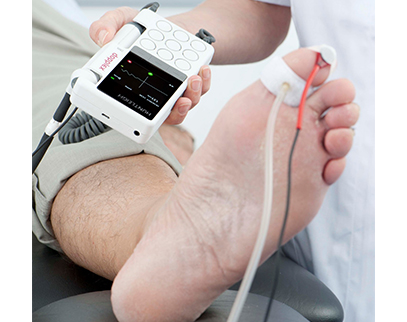
Toe pressures are a measurement of systolic blood pressure in the toes, typically used to assess peripheral vascular health, especially in those with diabetes or suspected peripheral artery disease. This non-invasive technique helps assess blood flow and peripheral arterial disease in the lower extremities, particularly in cases where the ankle brachial index (ABI) testing may be unreliable, such as in diabetic patients. Photoplethysmography (PPG) is a device that uses infrared light to measure changes in blood volume in the small blood vessels of the toe. By measuring the changes in reflected light, PPG can detect the pulse and estimate systolic blood pressure.
Finger Pressures
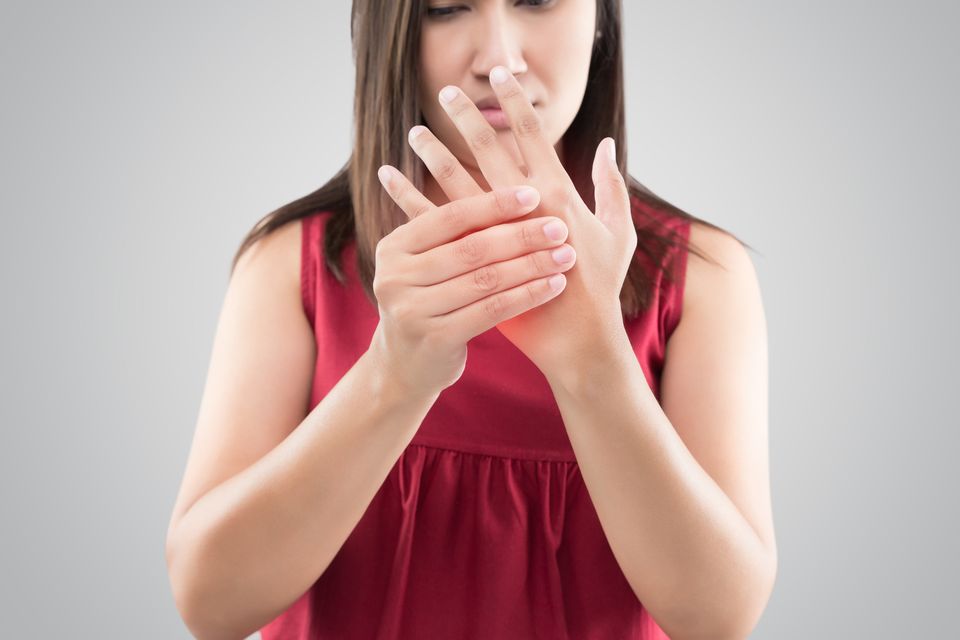
Finger pressure measurements are a valuable tool for assessing blood perfusion to the fingers. Such measurements are particularly significant in diagnosing and managing conditions that affect small vessel circulation, such as ischemia — caused by atherosclerosis or emboli and evaluating perfusion in patients with arteriovenous fistulas or grafts.
Why we do this scan
Reduced toe pressures are a strong indicator of peripheral artery disease, a condition where blood vessels in the legs and feet become narrowed or blocked, reducing blood flow. PPG toe pressures can help predict the likelihood of wound healing in the feet and can be used to track the effectiveness of treatments aimed at improving blood flow to the feet.
Finger pressures offer valuable insights into blood perfusion in the fingers and are particularly useful in assessing conditions affecting small blood vessels. Finger pressure measurements can help in diagnosing and managing conditions like upper extremity ischemia, evaluating perfusion in patients with arteriovenous fistulas or grafts, and monitoring patients with hemodialysis access-induced distal ischemia.
Why choose us
An experienced sonographer is preferred for PPG pressure tests because they possess the expertise to accurately interpret the waveforms generated by the PPG device and ensure proper technique, which is crucial for reliable results. This experience is especially important when dealing with patients who may have incompressible vessels due to calcification, often found in individuals with diabetes or renal disease.
Preparation for the test
Please avoid smoking, caffeine, and exercise for at least two hours before the test, as these can affect blood flow and potentially influence the results.
Toe Pressures: The test which will take up to 20 minutes and we will need access from the ankle to the toes so you will be required to remove shoes and socks. Loose, comfortable clothing is preferred. We will ask for you to lie on your back on the examination bed and a small cuff is placed around the base of the toes, with a PPG sensor at the end of the toe. The cuff is inflated to temporarily stop blood flow. As the cuff is slowly deflated, the PPG sensor detects the return of blood flow, and the pressure at which the flow returns is recorded as the systolic toe pressure.
Finger Pressures: The test which will take up to 20 minutes and we will need access from the upper arm to fingers. Loose, comfortable clothing is preferred. We will ask for you to sit on the examination bed and a small cuff is placed around the base of the fingers, with a PPG sensor at the end of the finger. The cuff is inflated to temporarily stop blood flow. As the cuff is slowly deflated, the PPG sensor detects the return of blood flow, and the pressure at which the flow returns is recorded as the systolic finger pressure.
CoreWave Vascular Ultrasound
Locations:
Wangara
Suite 3, 46 Buckingham Drive
Wangara, WA 6065
Canning Vale
Queensgate Specialist Centre
Suite 11, 2nd Floor, 2 Queensgate Drive
Canning Vale 6155
Waikiki Specialist Centre
Suite 7, 217 Willmott Drive
Waikiki, WA 616
Duchess Medical Practice
4/69 Duchess Street
Busselton, WA 6280
Contact Information:
Email: office@corewave.com.au
Phone: 0437 507 282
Business hours:
9am - 5pm
Monday to Friday
Saturdays – fortnightly
Fax: (08) 7947 7282