
Temporal Arteries
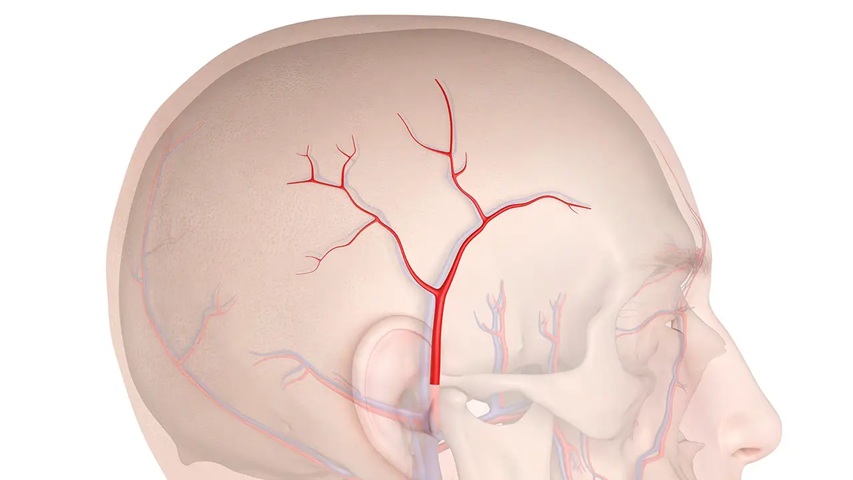
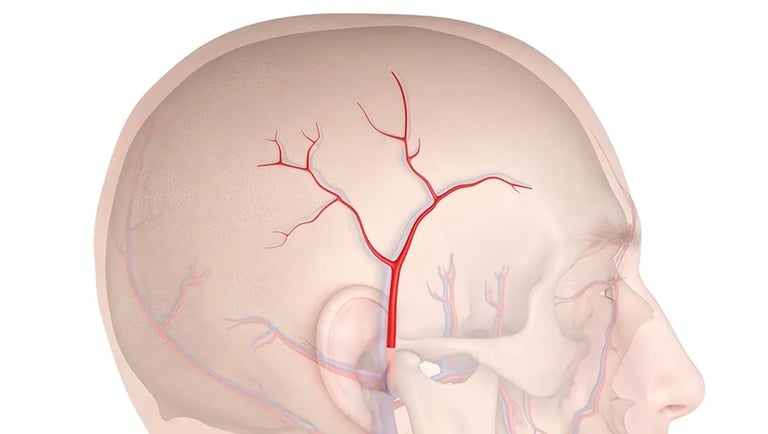
Temporal Arteries
Temporal arteries are blood vessels located on either side of the head and in front of the ears, running along the temples. They supply blood to the scalp, face, and importantly, the optic nerve. Temporal arteritis, also known as giant cell arteritis (GCA) is a condition where the temporal arteries or its branches, become inflamed. This inflammation narrows the arteries, potentially reducing blood flow. While the exact cause is unknown, it's believed to be an autoimmune condition, where the body's immune system mistakenly attacks its own blood vessels.
Why we do this scan
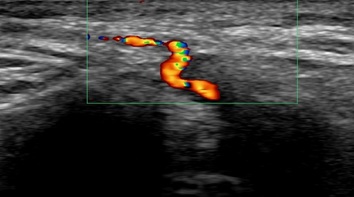
Ultrasound of the temporal arteries is used to help diagnose GCA, because it can non-invasively visualize characteristic features of the disease. Specifically, ultrasound can detect a "halo sign," which is a thickening of the artery wall, as well as stenosis (narrowing) or occlusion (blockage) of the artery. These findings can help confirm or exclude the diagnosis of GCA, potentially avoiding the need for a temporal artery biopsy in some cases.
Why choose us
An experienced sonographer is crucial for the accurate diagnosis of temporal arteritis because the technique is highly operator-dependent and requires expertise to identify subtle vascular changes indicative of the condition. In GCA, the disease can affect the artery segmentally, meaning that some areas of the artery may be affected while others are not. A less experienced sonographer may miss these subtle changes and misdiagnose the condition, especially if they do not know how to properly assess the entire length of the artery.
Risk factors
GCA is primarily a disease of older adults, with the average age of onset being around 70-75 years. It's rare in individuals under 50. Women are more likely to develop GCA than men, with some studies reporting a female-to-male ratio of 2.3 to 3.7:1. People of Northern European ancestry, particularly those with Scandinavian heritage, are at a higher risk for GCA. Polymyalgia Rheumatica, a condition causing muscle and joint stiffness, is strongly linked to GCA with individuals having a significantly increased risk of developing GCA. While not definitively established, some research suggests potential links between GCA and factors like smoking, geographic location, and exposure to certain viruses or toxins, though more research is needed in these areas.
Symptoms
Headaches:
Severe, persistent headaches, often throbbing and located in the temples, are a hallmark symptom.
Scalp Tenderness:
The scalp may be tender to the touch, making it painful to comb hair or rest the head on a pillow.
Jaw Pain:
Jaw pain, especially when chewing, is another common symptom. This is sometimes referred to as jaw claudication.
Vision Problems:
Blurred vision, double vision, or sudden vision loss (which can be temporary or permanent) are serious symptoms that require immediate medical attention.
Other Symptoms:
Fatigue, fever, weight loss, and flu-like symptoms can also occur.
Complications
GCA can lead to serious complications if not treated promptly. These include vision loss or blindness, stroke, and damage to other arteries, potentially leading to aneurysms. Corticosteroid treatment is crucial to prevent these complications.
Preparation for the ultrasound
There is no patient preparation needed for this scan. We will ask for you to lie on your back on the examination bed for the period of the scan which can take up to 20 minutes. A gel is applied to the skin, moving the transducer over the area and you will hear noises from the ultrasound machine which is the blood flow moving through your arteries. Wheelchair bound patients are able to be scanned in the seated position.
CoreWave Vascular Ultrasound
Locations:
Wangara
Suite 3, 46 Buckingham Drive
Wangara, WA 6065
Canning Vale
Queensgate Specialist Centre
Suite 11, 2nd Floor, 2 Queensgate Drive
Canning Vale 6155
Waikiki Specialist Centre
Suite 7, 217 Willmott Drive
Waikiki, WA 616
Duchess Medical Practice
4/69 Duchess Street
Busselton, WA 6280
Contact Information:
Email: office@corewave.com.au
Phone: 0437 507 282
Business hours:
9am - 5pm
Monday to Friday
Saturdays – fortnightly
Fax: (08) 7947 7282